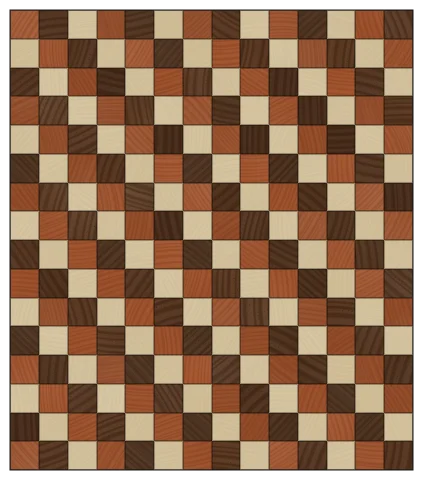
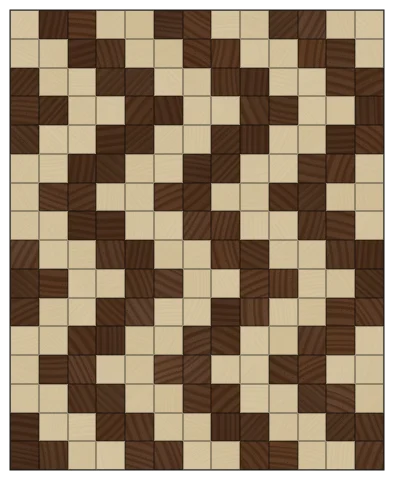
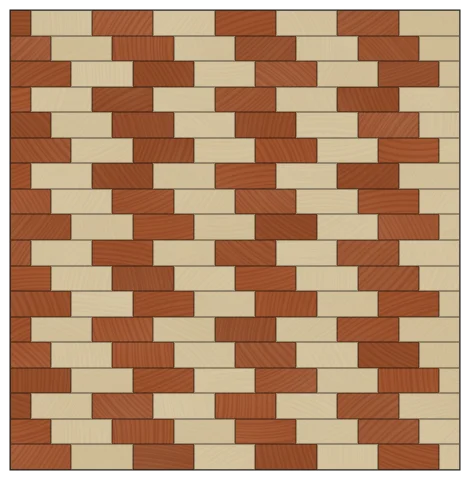
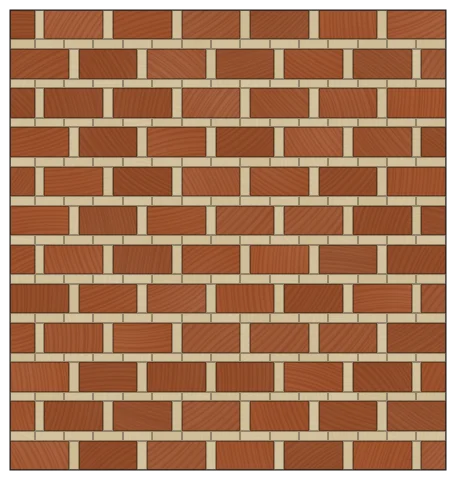
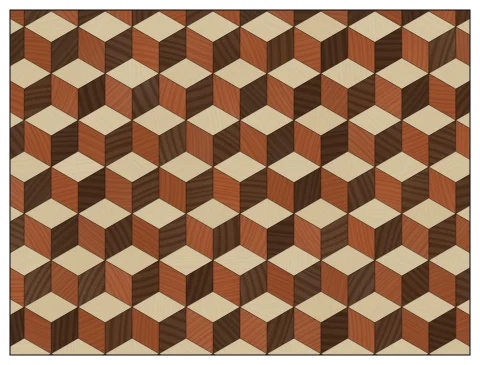
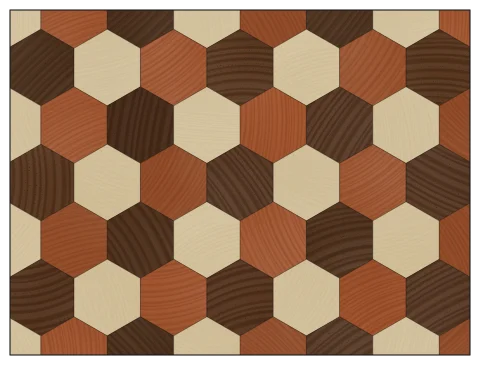
These are the 30 boards the app starts you with, drawn here by the app itself. Open one, then change its woods, its sizes or its pattern: the
cut list and the steps follow.
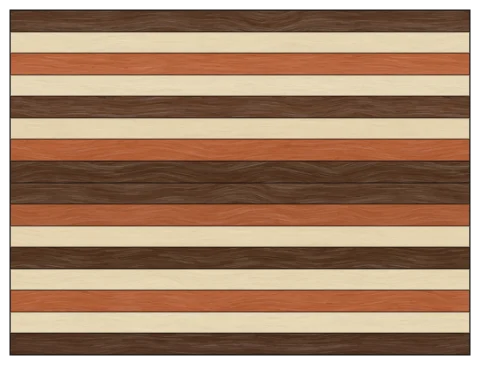
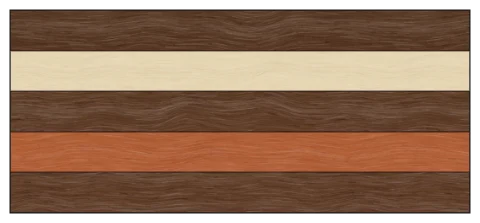
Edge-grain stripes16 × 12 inClassic long-grain board: narrow strips of three woods glued edge to edge.Charcuterie board17 × 7-1/2 inThin serving board with a few wide face-grain stripes.
Rows and panels
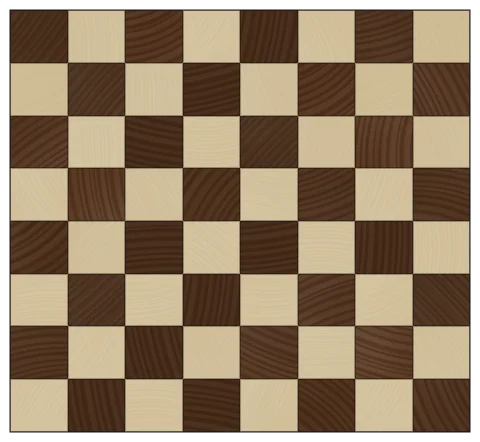
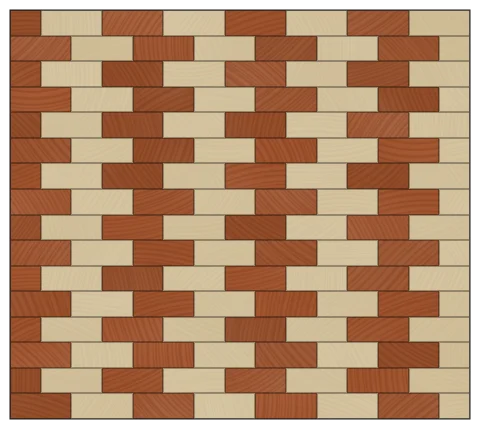
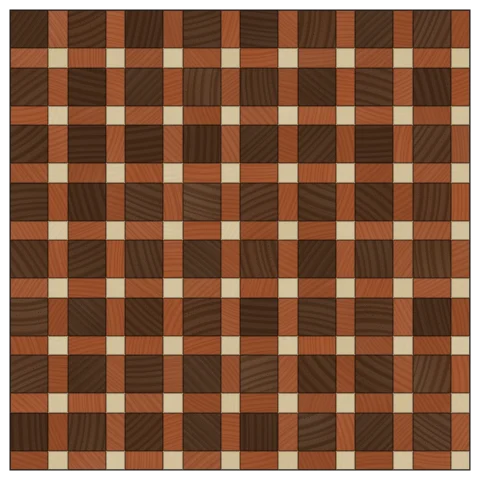
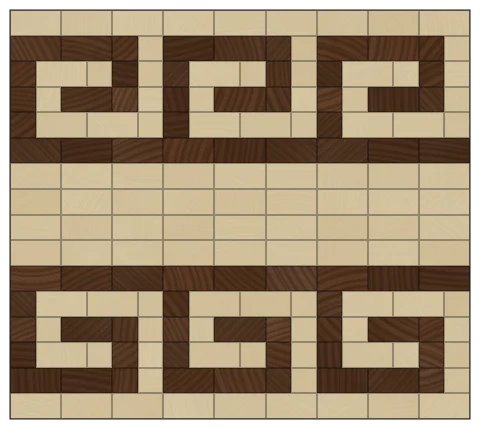
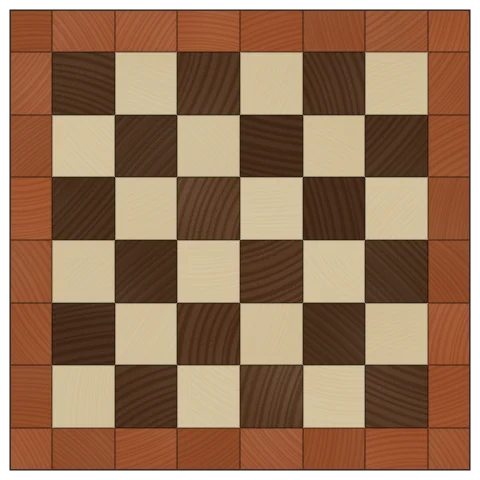
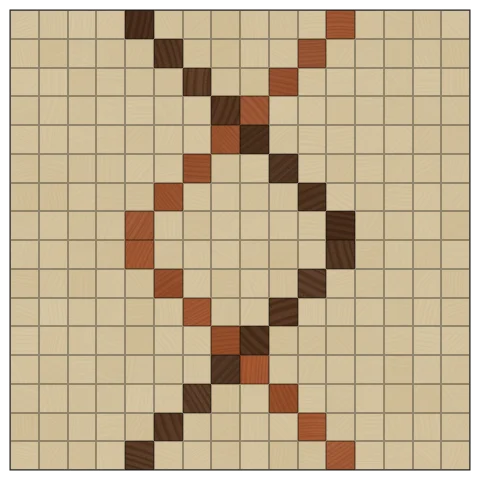
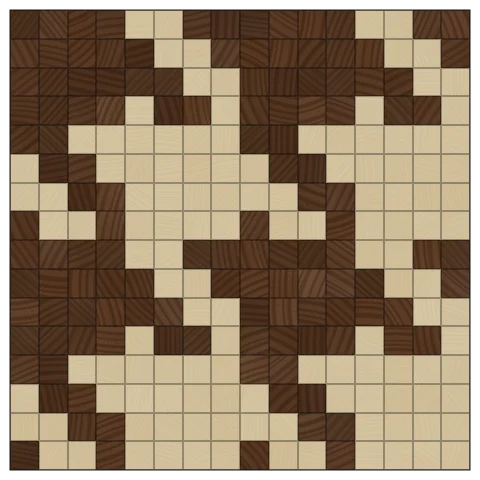
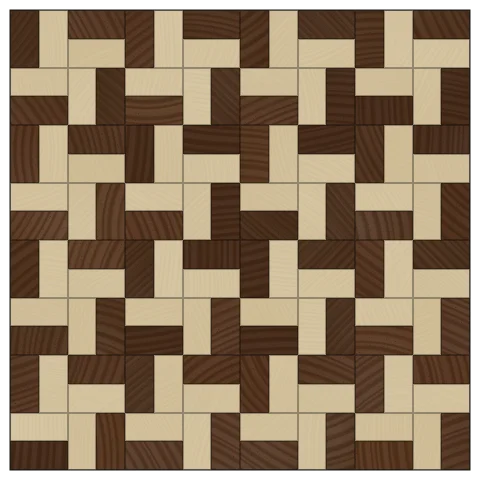
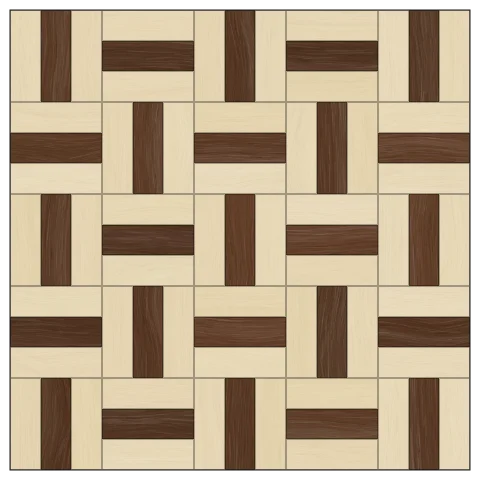
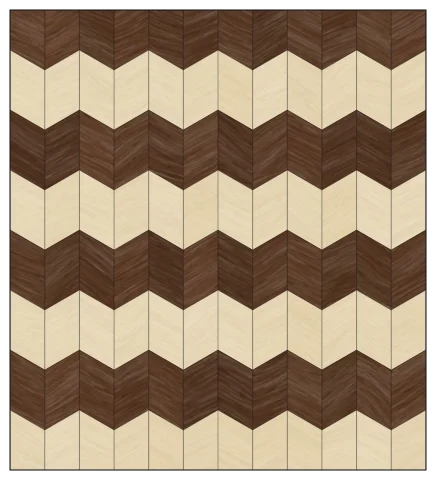
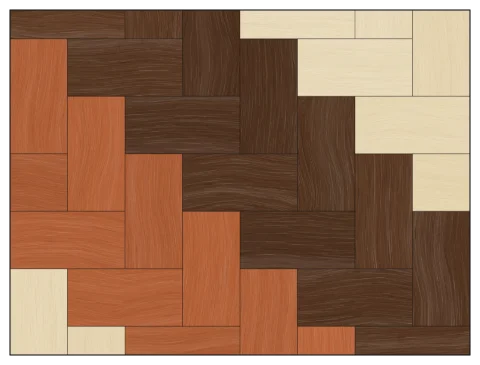
End-grain checkerboard12 × 11 inThick end-grain board; alternating slices flipped to form a checkerboard of two woods.End-grain brick11-1/4 × 10 inEnd-grain board with every other row shifted half a strip, like brickwork.Staircase10-1/2 × 12 inThree woods in 3/4 in strips; each row steps one strip over, so the colours climb in diagonals.Stepped zigzag9-3/4 × 12 inRows step right three times and back again, turning stripes into a stepped zigzag.Thirds brick11 × 11-1/4 inBrickwork whose courses step a third of a brick each row instead of a half.Brick with mortar lines11-1/8 × 11-3/4 inCherry bricks with thin maple mortar: head joints are strips in the brick panel, bed joints are thin rows from a second panel.Plaid12 × 12 inTwo panels crossed: walnut squares framed by cherry lines with maple at the crossings.Greek key border13-1/2 × 12 inA walnut Greek key running across the top and bottom of a maple field, painted on a 3/4 in grid.Bordered checkerboard11 × 11 inA walnut and maple checkerboard framed by a cherry border on all four sides.DNA12 × 12 inA walnut and a cherry strand that swing apart and cross like a double helix.Houndstooth12 × 12 inThe classic broken-check textile pattern in walnut and maple, on a 3/4 in grid.
Pixel art
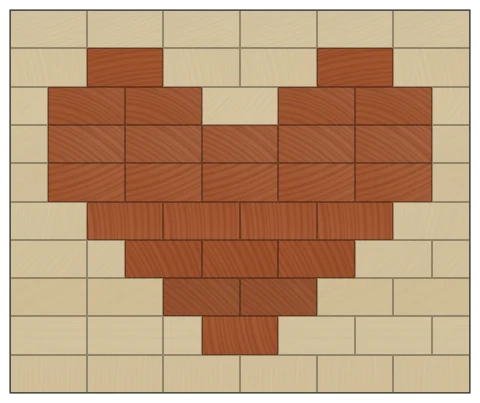
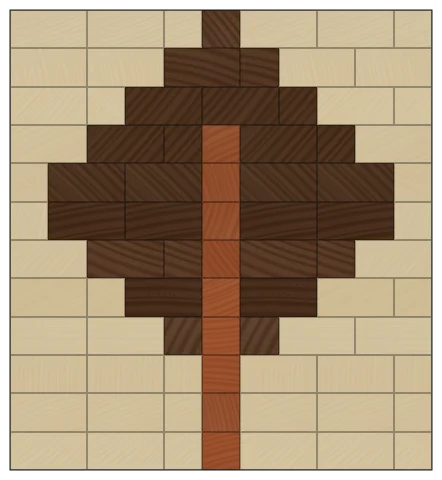
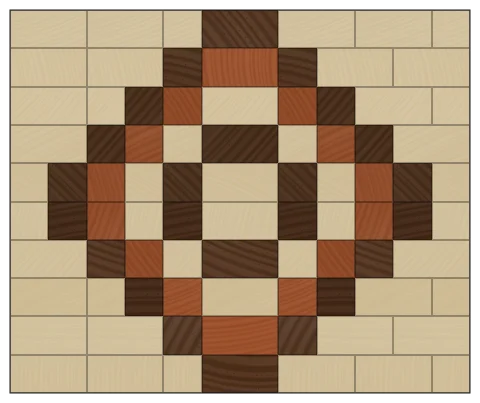
Pixel heart9 × 7-1/2 inA cherry heart on maple, drawn on a 3/4 in grid of end-grain blocks. Edit it with the grid painter.Pixel leaf8-1/4 × 9 inA walnut leaf with a cherry vein on a maple field: three woods in 3/4 in pixels.Pixel diamond9 × 7-1/2 inA walnut diamond outlined in cherry on maple: a small, bold picture to start from.
Rotated blocks
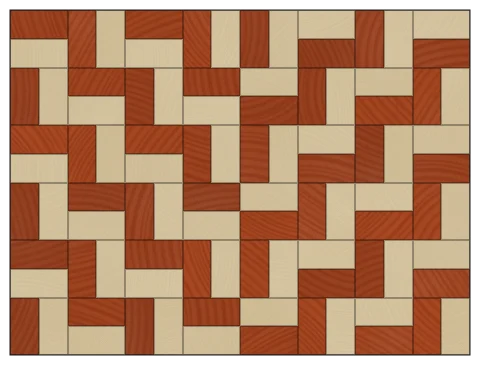
Pinwheel11 × 11 inEnd grain: walnut and maple tiles 1-3/8 in square, turned a quarter turn at a time around each block of four.Basket weave11-1/4 × 11-1/4 inFace grain: maple-walnut-maple tiles 2-1/4 in square, alternately turned across and along like a weave.Block zigzag14 × 10-1/2 inEnd grain: padauk and maple tiles 1-3/4 in square, turned so the padauk steps down and up in zigzags.
Angled cuts
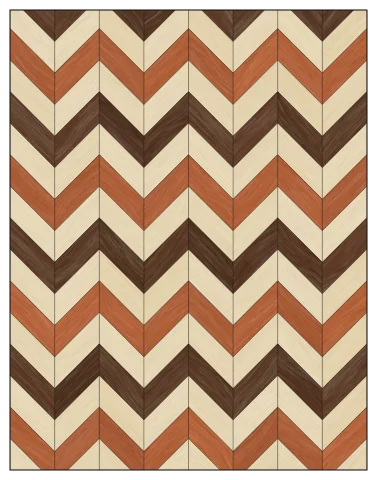
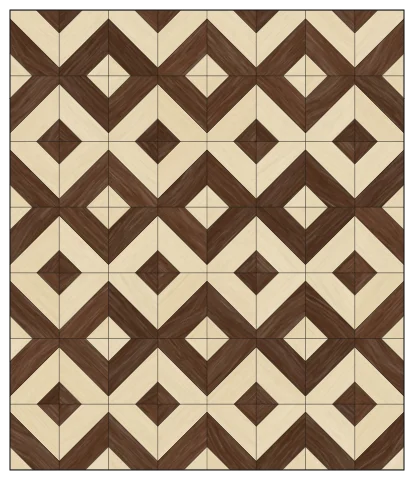
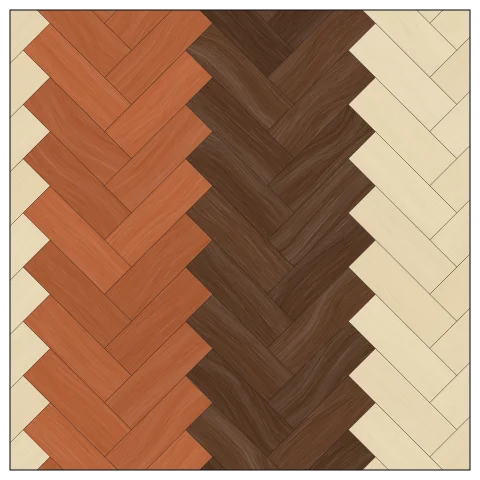
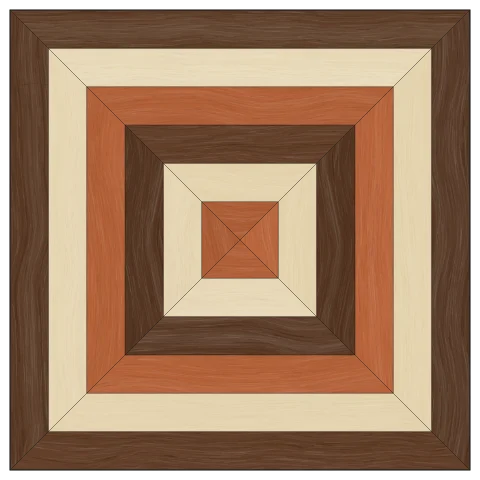
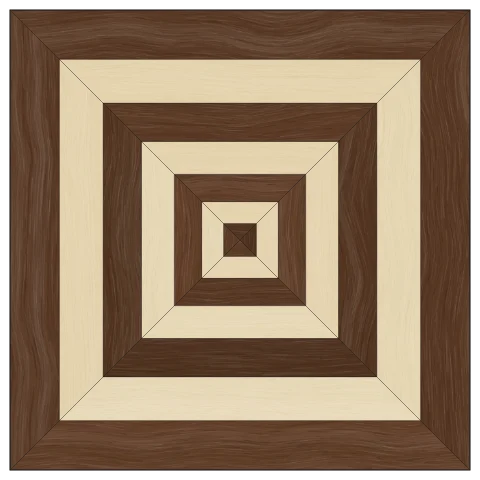
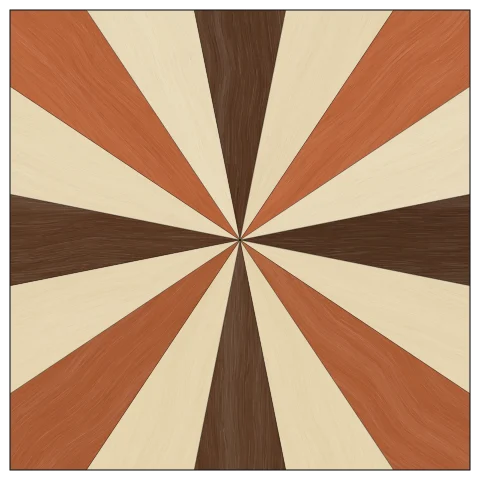
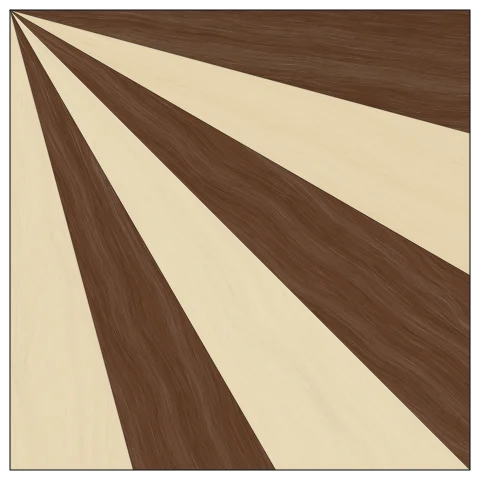
Chevron12 × 15-1/2 inWalnut, maple and cherry stripes cut at 45° and turned every other slice, meeting in Vs.Tight chevron12 × 13-1/4 inWide walnut and maple stripes cut at 30° into narrow slices: a flatter, busier zigzag.Diamond12 × 14 inA 45° walnut and maple chevron cut into bands with every other band turned over, closing the Vs into diamonds.Herringbone12 × 9 inWalnut, maple and cherry bricks 1-1/2 × 3 in in the classic herringbone bond; each zigzag course is one wood.Herringbone at 45°12 × 12 inThe same bond turned 45°, so the zigzag courses run straight down the board.Concentric squares10-1/2 × 10-1/2 inSix equal rings of cherry, maple and walnut closing in on the centre; four mitred triangles of one striped panel.Bubble10-1/2 × 10-1/2 inWalnut and maple rings that grow wider from the centre outward, like ripples in a pond.Sunburst12 × 12 inSixteen wedges of walnut, maple and cherry fan out from the middle of a square board.Corner burst12 × 12 inSix walnut and maple wedges fan out from one corner of the board, each a whole wedge from edge to edge.
Tiled shapes
Tumbling blocks12 × 9 inMaple, cherry and walnut rhombus sticks that read as stacked cubes. Side 13/16 in so the sticks come from 3/4 × 1-1/2 in stock.Honeycomb12 × 9 inHexagon sticks with 1 in sides in walnut, maple and cherry, no two neighbours alike. Each blank is a 2 × 2 in stick planed to 1-3/4.
 Board Designer